
The 60 Second Summary:
IBR is widespread in New Zealand cattle, with most dairy herds carrying evidence of infection. Reported figures range from 60–80% of dairy farms having the virus present, with antibody prevalence in individual adult cattle varying widely between studies. Dairy herds are more affected than beef herds because cows are in closer contact, and the virus spreads readily through nose-to-nose contact, aerosol over short distances, semen, and reactivation in latently infected carriers. Most New Zealand infections never produce visible signs of illness — which is exactly why the prevalence is so high and the spread so often goes unnoticed.
How widespread is IBR in New Zealand?
New Zealand veterinary sources consistently describe IBR as highly prevalent in the national cattle population. Specific figures vary depending on the study and what's being measured.
Herd-level prevalence in dairy: Studies referenced by NZ veterinary clinics put the figure at approximately 60–80% of New Zealand dairy farms having IBR present within the herd. Some sources put the upper end of this range higher, depending on the diagnostic methods and herd selection used.
Individual animal antibody prevalence: Across studies, the proportion of adult cattle with antibody evidence of past IBR exposure has been reported in a wide range — from around 19% up to 82% in adult cattle, depending on the study, region, and farm system. In any individual herd that's been exposed, antibody prevalence among mature cows tends to be high; in herds that have stayed clean, it can be very low.
Why such variable numbers? Three reasons:
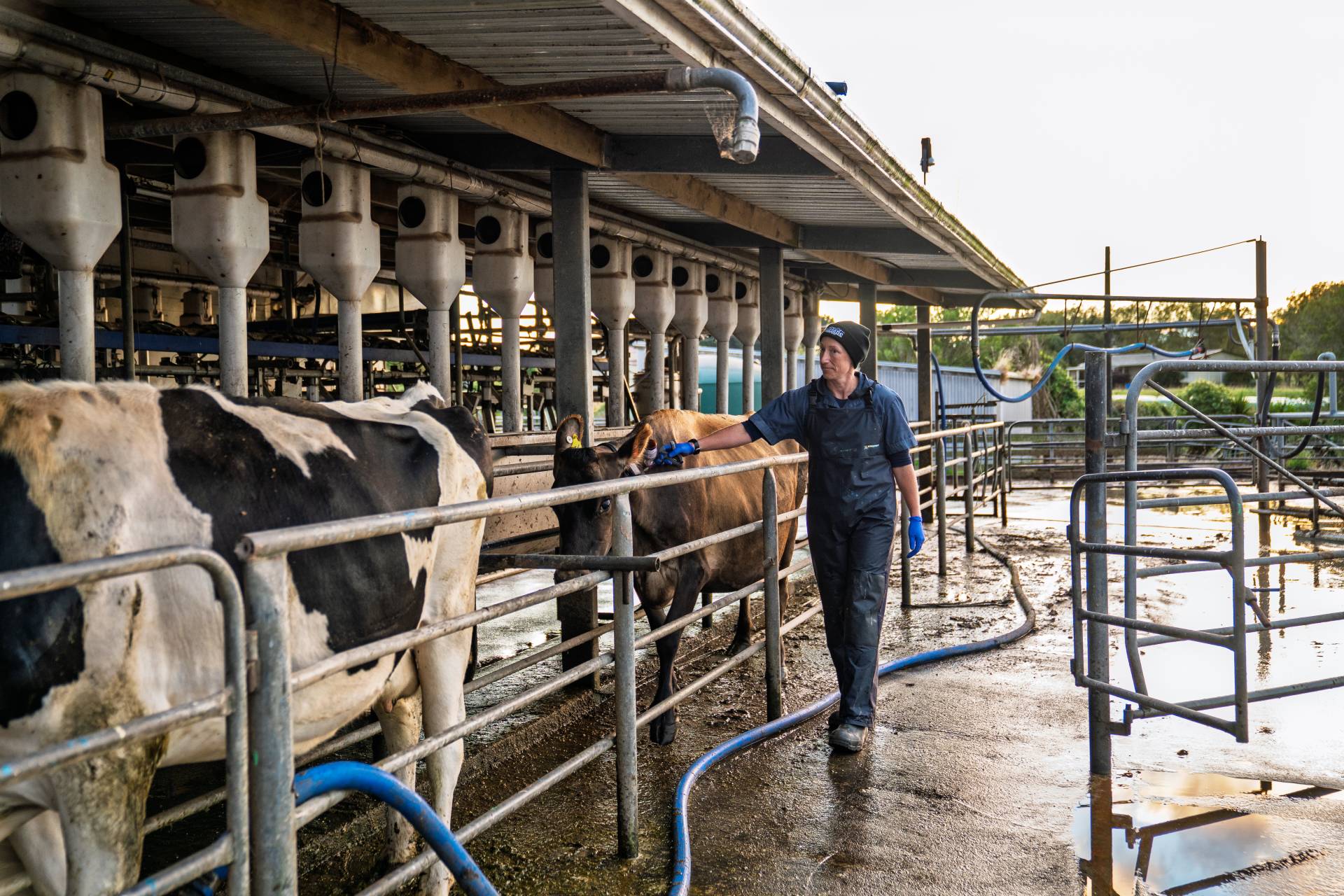
Why dairy more than beef? Contact patterns. Dairy cows enter the milking shed once or twice a day, stand close together at the bail, share feed troughs, and mix more intensively than beef cattle on extensive pasture systems. Respiratory viruses thrive on that contact density.
The bottom line for an individual farmer: national averages tell you the virus is common but don't tell you about your own herd. Blood testing is the only practical way to find out where your farm sits within the picture, talk to your vet about this.
Most New Zealand dairy herds operate on seasonal calving, with calving and mating compressed into a few weeks each year. This pattern interacts with IBR in ways that are worth understanding.
International research from Irish seasonal-calving systems — closest in structure to New Zealand dairy — shows that IBR outbreaks in seasonal herds tend to affect animals across all age groups simultaneously, often producing near-complete seroconversion within an affected group within a short period. The virus then becomes latent in those animals and may not produce another visible outbreak for several years.
What this means in practice on a New Zealand dairy farm:
The seasonal pattern doesn't make IBR worse or better than year-round calving systems — it just makes the outbreak dynamics more episodic and the heifer-replacement pressure point more concentrated.

How IBR spreads between cattle
IBR has several established transmission routes. Most outbreaks involve more than one of these acting together.
Nose-to-nose contact
The single most important transmission route in dairy systems. Infected animals shed virus in nasal secretions, and direct contact between muzzles — at troughs, at the bail, over fences, during mixing — transmits virus efficiently. The dairy contact pattern is essentially built around this kind of contact, which is why dairy herds maintain higher prevalence than beef.
Aerosol over short distances
Coughing and sneezing release virus-laden droplets that can travel short distances through the air. In enclosed environments — sheds, calf housing, transport vehicles — aerosol spread amplifies the direct-contact route. Outdoors and at distance, aerosol transmission is less efficient.
Semen and natural mating
Bulls infected with IBR can shed virus in semen and transmit infection during natural mating. The reproductive form of IBR — affecting fertility — is often introduced or spread by this route. Reputable AI suppliers screen bulls and semen, so artificial insemination is a much lower-risk option than natural service with bulls of unknown status. Leased and shared bulls moving between farms are the highest-risk category.
Fomites — equipment, clothing, vehicles
The virus can survive on surfaces for short periods. Equipment used across mobs, clothing and footwear worn between properties, shared yards, stock trucks, and farm vehicles can all carry virus between animals and between farms. Fomite transmission is more important over short timeframes — hours to a day — than over longer periods, since IBR doesn't survive indefinitely outside the host.
Vertical transmission
A pregnant cow infected with IBR can pass virus to her foetus which could result in impacted calf health. Calves can be exposed in utero or during birth.
Reactivation in latent carriers — the unique route
This is the transmission route that makes IBR different from most other infectious diseases. Cows that were infected at some point in the past — possibly years earlier — carry the virus permanently in nerve cells in a dormant state. Under stress, the virus reactivates and the cow begins shedding again, usually without showing any signs of illness herself.
The result: an apparently healthy cow in a herd with no recent disease history can suddenly become an active source of infection. This is the mechanism by which "clean" herds produce outbreaks years after the last visible case, and why IBR control can't rely on identifying sick animals alone.
The stress events that reliably trigger reactivation are familiar to any dairy farmer:
Most of these events happen on most farms every year, often to multiple cows at once. The reactivation route is not a rare occurrence — it's a routine feature of how IBR maintains itself in a herd over time.
Why the spread so often goes unnoticed
A consistent observation from New Zealand veterinary sources is that most infected cows show no clinical signs. Absence of visible disease is the norm, not the exception. This produces a paradox that defines how IBR behaves in New Zealand:
The animals most likely to show clinical signs are the ones least likely to have met the virus before — naïve heifers, particularly those entering the milking herd for the first time after being raised off-farm. These are also the animals most likely to suffer reproductive consequences, because their first exposure often coincides with mating.
This is why heifer cohorts so often emerge as the visible face of an IBR problem on a New Zealand dairy farm: not because the virus is only in the heifers, but because the heifers are the main group where the virus produces visible signs.
What this means for control
Three implications fall out of the prevalence and spread picture:
1. National prevalence doesn't tell you your herd's status.
2. Stopping spread within an infected herd is hard. Direct contact, aerosol, and reactivation routes all operate continuously in normal dairy management. Reducing transmission pressure through vaccination, stress management, and biosecurity is more realistic than trying to eliminate it entirely.
3. The highest-leverage control measures target the introduction events and the naïve groups. Quarantining incoming stock, vaccinating heifers before they join the herd, and managing bull sourcing all address the moments when the virus moves or finds new targets — which is where most of the damage is done.
Speak to your vet about IBR on your farm and what prevention and control options are available.